Service Review
This is not just order taking. The delivery boundary is reviewed first
Before quoting, buyers need to know what will be checked, what affects quote and lead time, and what confirmation they will receive.
Review the packet
Check geometry, material, tolerance, finish, quantity, and deadline before pricing.
Split the process path
Review machines, fixtures, tooling, outsourced finish, inspection, and packaging.
Return quote boundary
Separate price and lead-time drivers so the buyer can decide internally.
The 3 decisions buyers need
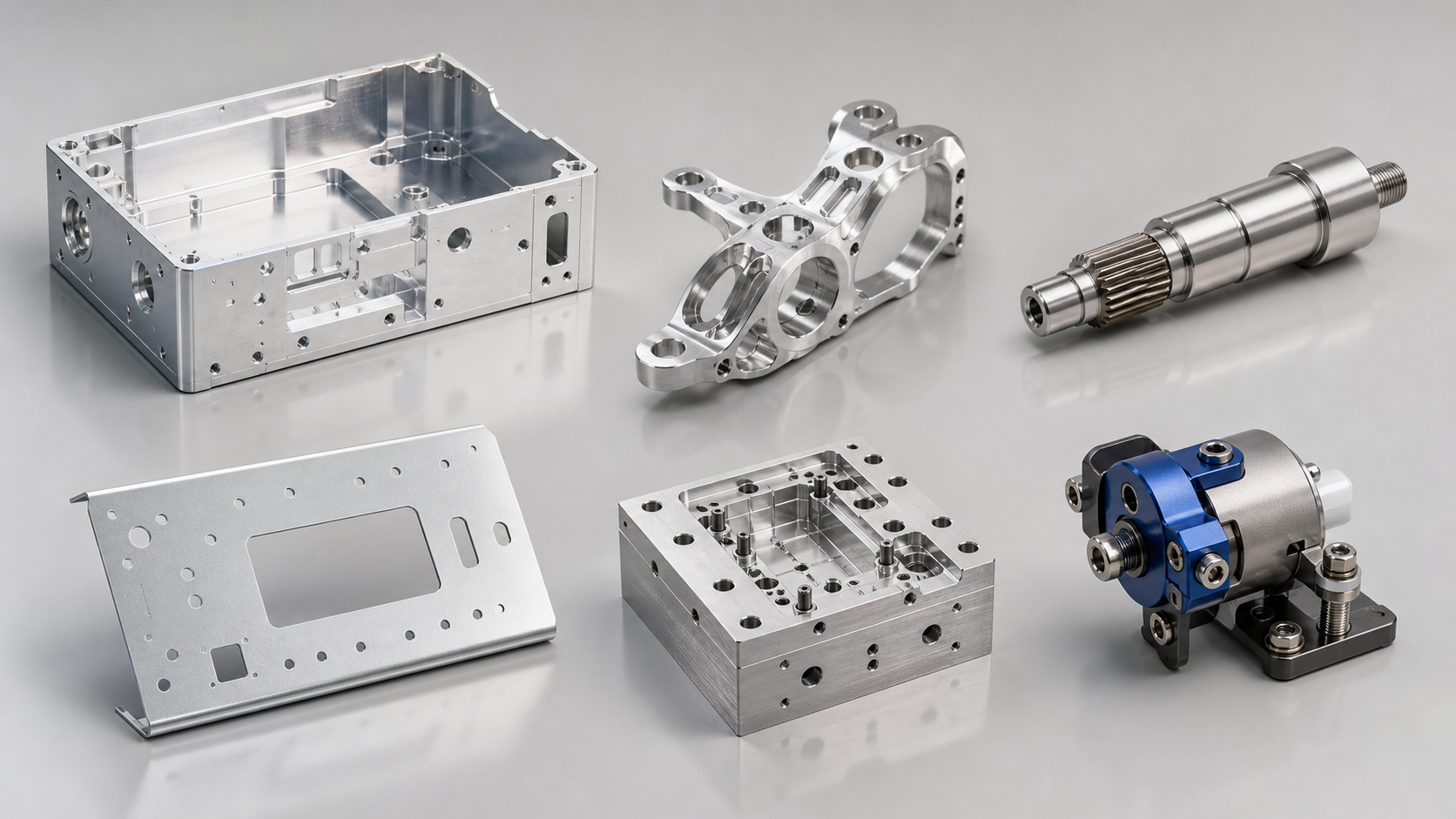
Project Notes
Prototype cost often grows because the structure is not frozen, material is over-specified, or cosmetic finishing is decided too early.
Confirm functional surfaces and critical dimensions first. Cosmetic surfaces and batch processes can be refined in the next iteration.
Main quote and lead-time drivers
Critical tolerance
Tighter tolerance increases fixture, tooling, and inspection time.
Thin walls and deep pockets
Thin walls and long tool reach affect distortion and tool marks.
Finishing
Blasting, brushing, anodizing, and masking define cosmetic risk.
Quantity rhythm
One prototype and repeat small batch use different planning.
Fit
Best way to move forward
- Housings, brackets, fixtures, heat sinks
- Prototype moving toward small batch
- Dimension record or cosmetic check required
Risk
Cases that should not go straight to quote
- Photos only with no target dimensions
- Material, tolerance, and quantity missing
- Every dimension marked as tight tolerance
What we check during drawing review
Quote Communication Table
| Item | Price Impact | Lead-Time Impact | Recommended Action |
|---|---|---|---|
| Material grade | Material cost and cutting parameters | Purchase timing | Provide acceptable alternatives |
| Critical tolerance | Machining and inspection time | Rework risk | Mark only truly critical dimensions |
| Finish | Outsourcing and masking cost | Scheduling and color approval | Mark cosmetic faces |
| Quantity | Fixture and batch efficiency | Production rhythm | State prototype vs small-batch goal |
Key Specs
Best Fit
After Review
What the buyer should receive after review
A useful reply is not only a price. It should separate risk, lead-time logic, and delivery boundary so the buyer can move internally.
What To Send
Send these items together for faster review
Incomplete data can still start a discussion, but complete RFQ data makes pricing faster and clearer.
- Separate critical and normal dimensions
- Tell us if it is only for functional testing
- Simplify finishing for early samples